
Glossary of Garden Lighting Techniques
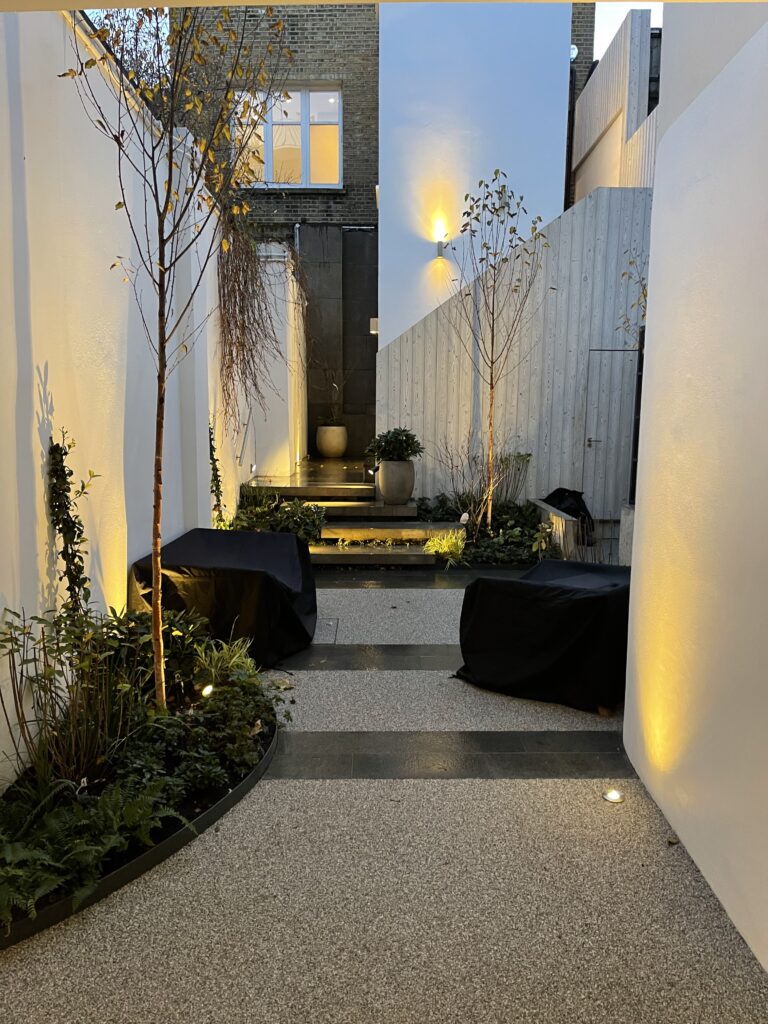

Understanding different lighting techniques can help you choose the right approach for your garden. Below are some key methods used in landscape lighting:
Uplighting
This technique involves illuminating architectural and landscape features from below, creating dramatic visual effects. Fixtures are often concealed using glare shields and louvres, keeping the light source hidden from the main viewing angles.
Downlighting
Lighting from above enhances landscapes or architectural features, provides safety or security, and can create special effects. This technique can focus on a broad area or a single feature, adding perspective and depth.
Moonlighting
Resembling natural moonlight, this soft and diffuse effect is achieved by projecting light downwards, often through foliage, casting intricate shadows below. It can be combined with upward lighting for a fuller illumination of trees.
Spotlighting
Spotlighting powerfully illuminates individual features from above or below with a focused beam. Ideal for highlighting sculptures, statues, landscape elements, architectural details, and flagpoles.
Underwater Lighting
Used in ponds, fountains, and other water features, this technique creates captivating effects ranging from strong underwater spotlights to gentle, glowing illumination.
Pathway Lighting
Pathway lighting ensures safe navigation along walkways, providing both security and aesthetic appeal. Light is projected from above or beside the path.
Grazing
This method highlights textures by placing light close to a surface like a wall or fence, and shining it across at a shallow angle. It accentuates surface details and creates dynamic shadows.
Flood Washing
Flood washing evenly illuminates large areas or objects. The effect varies with fixture spacing: wider spacing creates a scalloped look, while closer spacing offers a smooth, uniform wash.
Step Lighting
Essential for safety, step lighting clearly marks step edges. Available in various lighting options (fluorescent, incandescent, tungsten halogen) and voltages, it ensures steps are safely visible.
Shadowing
This technique projects the shadow of an object, like a tree or architectural feature, against a backdrop using strong frontal lighting. The size and shape of the shadow can be manipulated for dramatic effect.
Silhouetting
Backlighting objects to create striking silhouettes against a surface, this theatrical effect is achieved by positioning lights directly behind and below the object of focus.
These techniques are just the starting point in creating your unique garden lighting design. For more detailed advice and customization, contact our experts.
Ready to transform your garden with lighting? Call us at 07951 412 862 or click here to email us for a consultation.